Acquiring text varities

One of the most important goals of formal schooling is teaching text varieties that might not be acquired outside of school […] Early in school, children learn to read books of many different types, including fictional stories, historical accounts of past events, and descriptions of natural phenomena. These varieties rely on different linguistic structures and patterns, and students must learn how to recognize and interpret those differences. At the same time, students must learn how to produce some of these different varieties, for example writing a narrative essay on what they did during summer vacation versus a persuasive essay on whether the school cafeteria should sell candy. The amount of explicit instruction in different text varieties varies across teachers, schools, and countries, but even at a young age, students must somehow learn to control and interpret the language of different varieties, or they will not succeed at school.

Biber & Conrad (2009:3)

Biber, D., & Conrad, S. (2009). Register, genre, and style (Cambridge Textbooks in Linguistics).

Check other quotations here.
OASIS

The Open Accessible Summaries In Language Studies (OASIS) initiative aims to make research findings on language learning and teaching available and accessible to a wide audience.

OASIS summaries are one-page descriptions of research articles on language learning, language teaching, and multilingualism that have been published in peer-reviewed journals listed on the Social Science Citation Index. The summaries provide information about the study’s goals, how it was conducted, and what was found, and are written in non-technical language. Where relevant, they also highlight findings that may be of particular interest to language educators, although the initiative is not solely aimed at research with immediate practical implications. The summaries are generally approved, and often (co-)written, by the author(s) of the original journal article.

Improving Writing Through Corpora

Online Data-Driven Learning SPOC “Improving Writing Through Corpora” is now live at the following address:
https://edge.edx.org/courses/course-v1:UQx+SLATx+2019/about

Improvements in Version 2 include:

A) All course images and functionality have been updated for the ‘new’ Sketch Engine interface.


B) New functions specific to the ‘new’ Sketch Engine interface are now included in the course (e.g. Good Dictionary EXamples (GDEX))


C) Course is now completely self-contained – no need for external assessments.  Certificates of completion generated automatically upon completion of online activities.  


D) Improved reflective component and opportunities for peer discussion.


The course is primarily pitched at L2 graduate writing students, but anyone is eligible, whether a student, lecturer, or anyone with an interest in language and technology. 

To enrol, follow the instructions at the link provided.  Please contact the course creator Dr. Peter Crosthwaite at p.cros@uq.edu.au with any questions or technical problems.

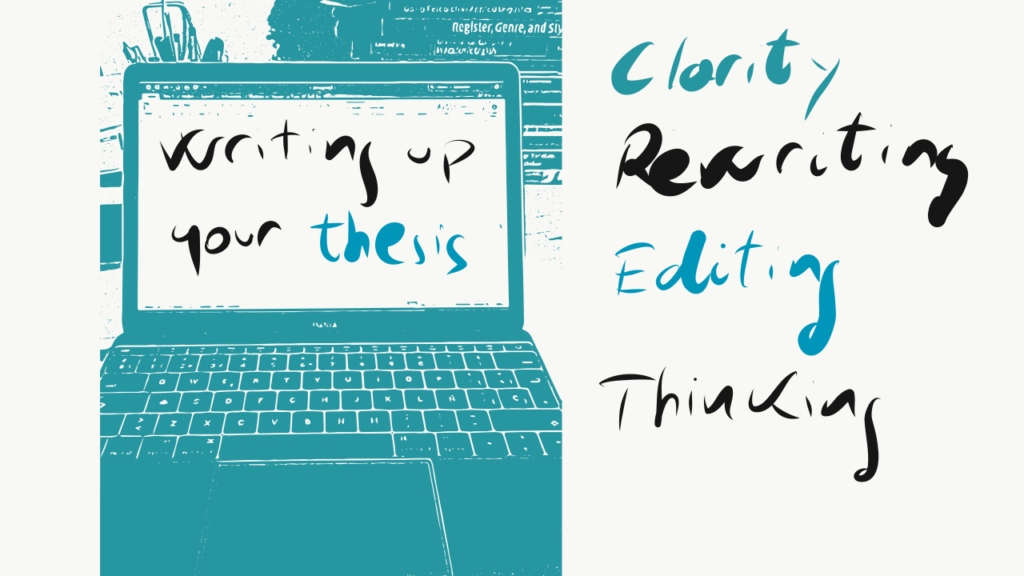
Writing your MPhil thesis: 5 tips

(1) Jacques Barzun: The act of writing is itself an exercise of thought. Writing is important. But thinking is essential. Read more here. Make sure your writing reflects criticality.

(2) Try to achieve clarity. Nobody has ever been criticized for writing that is too clear. Communicate your ideas in the simplest and most precise way possible. For your writing to be lucid, you as the writer need to know exactly what you’re trying to say. More tips on clarity here.

(3) There is not such a thing as enough editing. To achieve clarity you need to edit your writing. Chuck Wending: writing is when I make the words. Editing is when I make them not shitty.

(4) You think you´re done with your writing? Don´t think so. As your friends to read your manuscript. Re-read yourself. All writing is rewriting. Read more here.

(5) Belcher (2019) recommends the following micro-revising tips (my selection):

a. Don´t use 2 words where one will do.

b. Don´t use a pronoun when a noun would be clearer.

c. Don´t use an adjective or adverb unless you must.

d. Don´t use a general word when you can use a specific one.